PALIMPSEST
2025

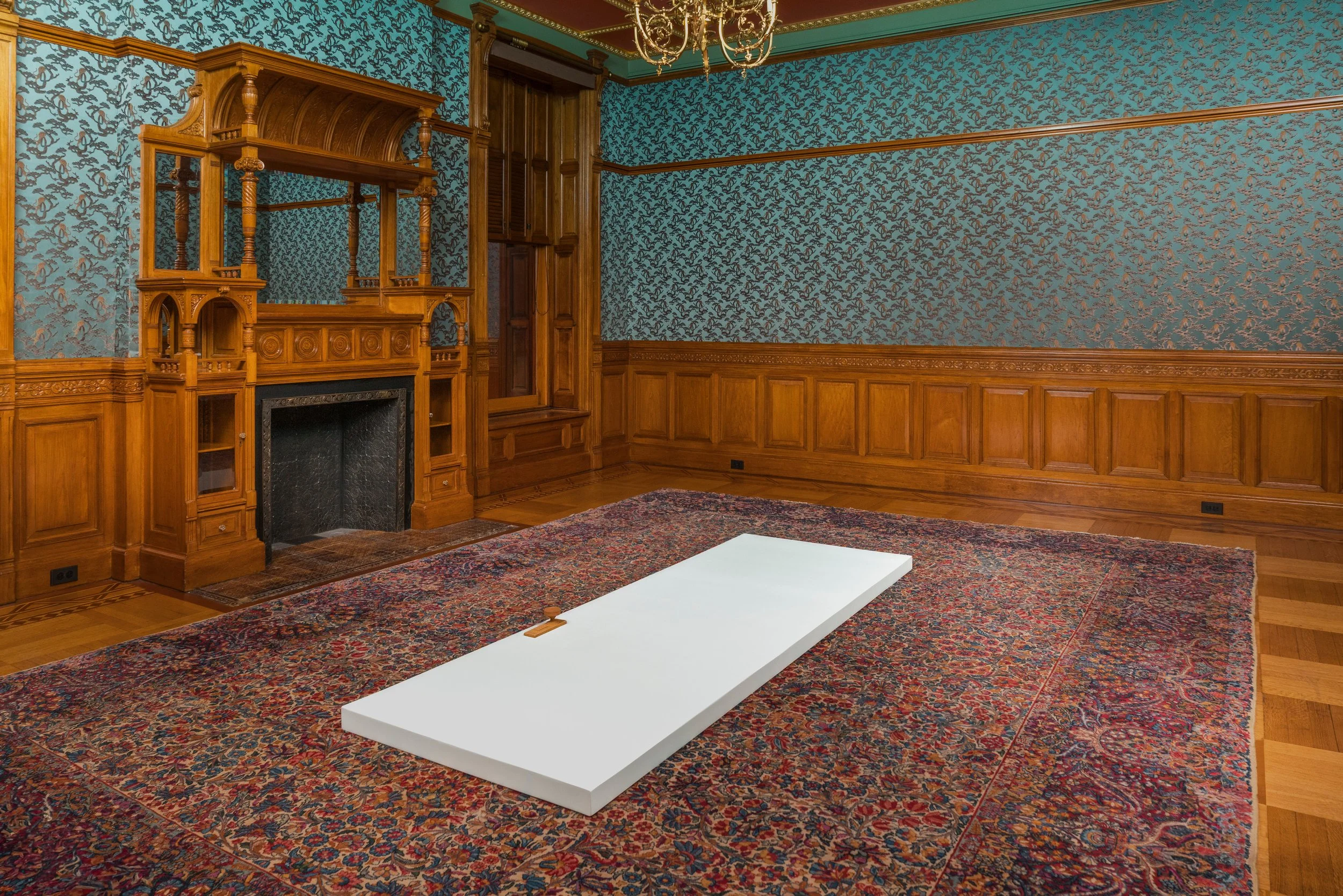
Industry of the Ordinary address issues of visibility in a mansion from the original Gilded Age.
In 1871, the Great Chicago Fire laid waste to over three-square miles of the city, resulting in the loss of nearly three hundred lives and the destruction of over 18,000 structures. This included the Nickerson family original residence, which once stood in the place of the Driehaus Museum, for which this work was created.
A year later, as a precaution, local ordinance required new constructions to be made of brick or stone. Eager to find plentiful and affordable clay, builders began to excavate the bed of the Chicago River to make the bricks needed to build the new Nickerson Mansion. Hidden under the opulent veneer of the now-Driehaus Museum are the original Chicago Common Bricks that were used to build the foundation.
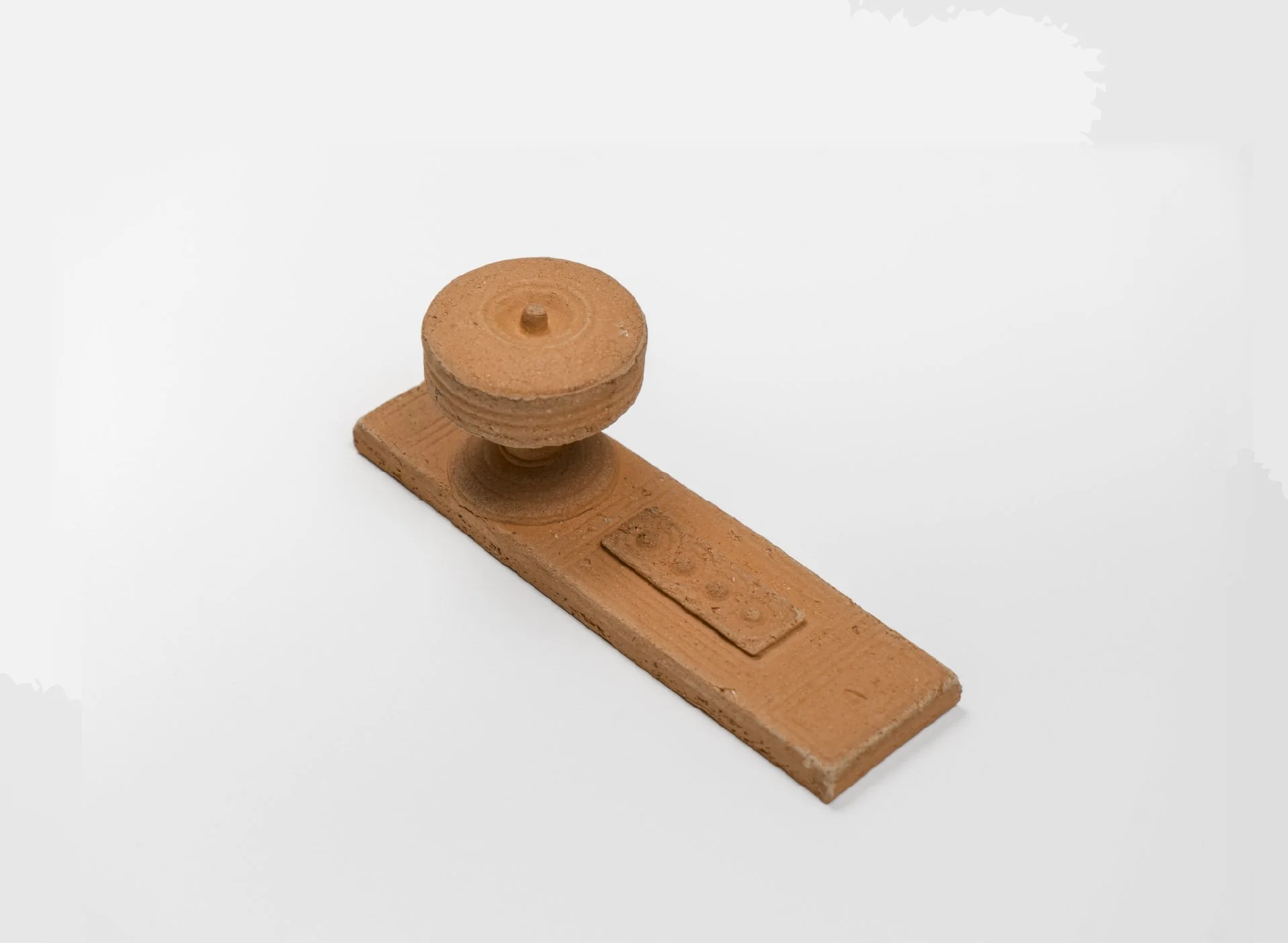
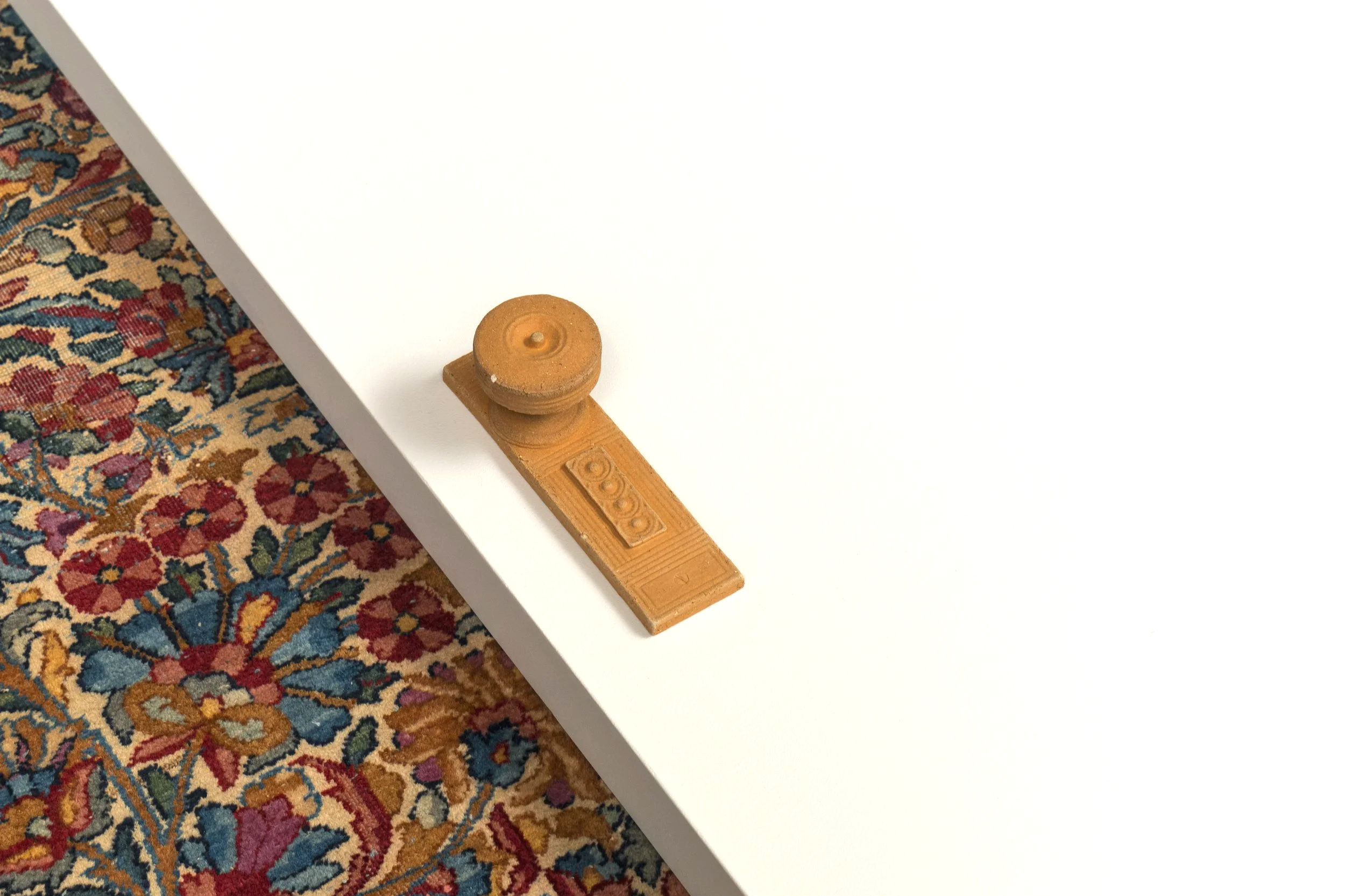
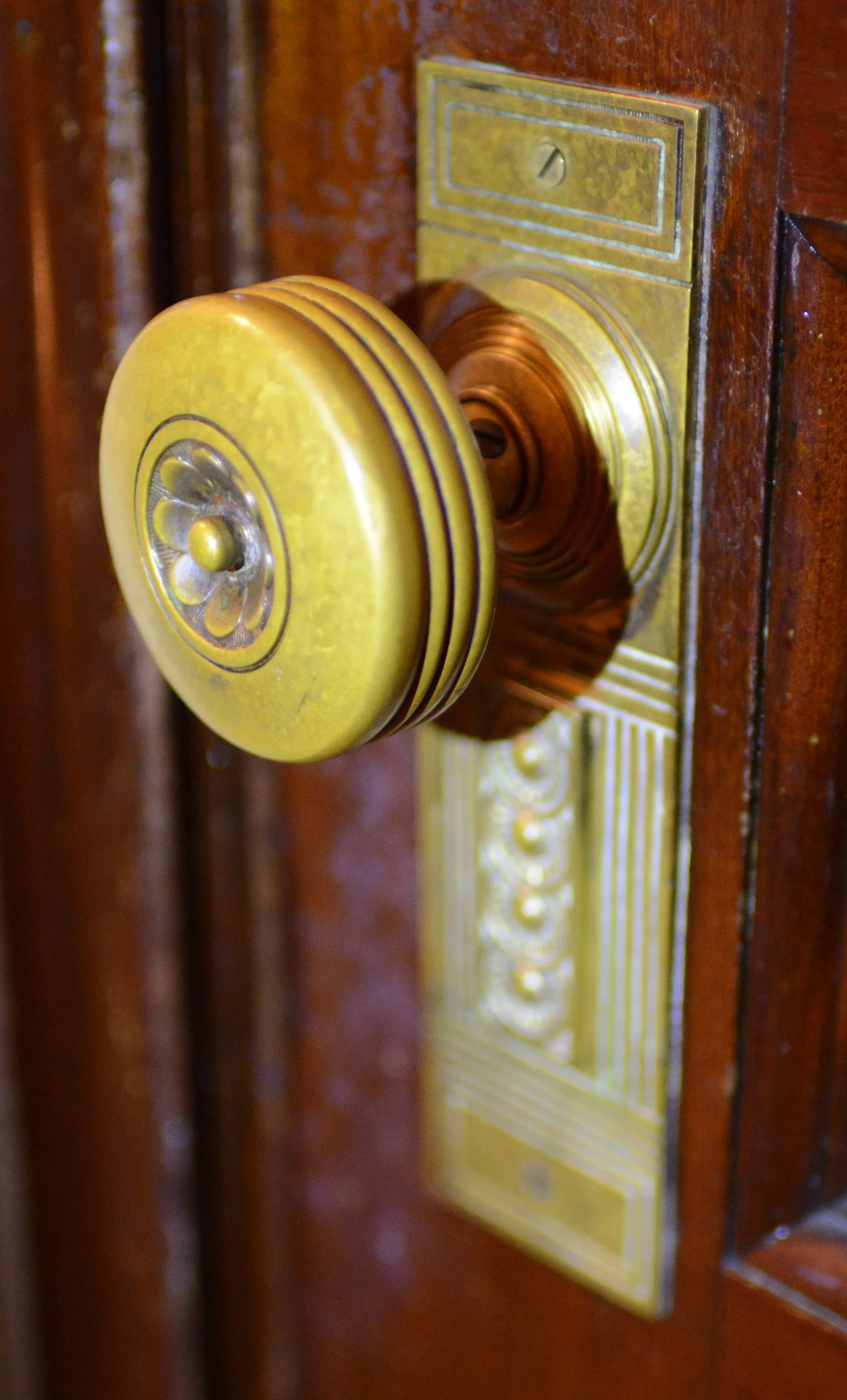
For this work, IOTO 3D-scanned a brass doorknob from one of the doors that separates the family spaces from the servants' quarters, creating a duplicate composed of clay taken from the Chicago River bed.
Placed on a prone facsimile of the door to which the original belongs, the door that led to the servants' quarters, this object suggests a trapdoor between "upstairs" and "downstairs."
Palimpsest thus gestures at the entwined histories of materiality and labor that often become invisible in the elegant spaces of mansions and other grand buildings.
Industry of the Ordinary would like to thank the following for their invaluable assistance in the production of this work: H Schenck, Allyson Reza, Ben Stagl,
and especially Matthew Groves.
Thanks also to curator Giovanni Aloi, and the entire staff at the Driehaus Museum.
More information about this project here.
Press coverage of the Materialities exhibition here.